Knowing What to Ask, What to Verify, and When Not to Trust AI
AI can help you write, research, plan, brainstorm, and get past the dreaded blank page. It can also be confidently wrong.
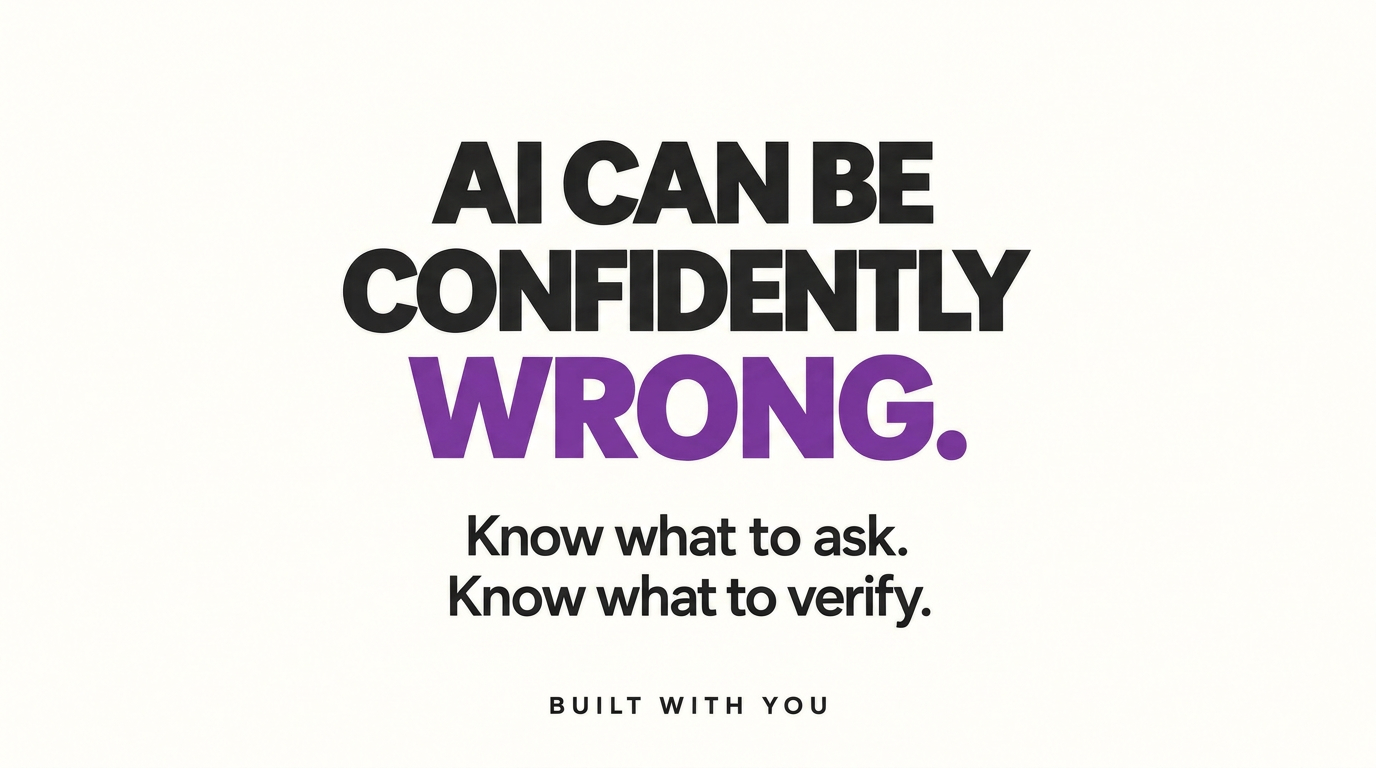
That is what makes learning to use AI a little different from learning another piece of software. It is not enough to know which button to push. You also need to know what to ask, what to verify, and when a human needs to stay in charge.
Ask better questions
AI fills in whatever information you leave out, and its assumptions may not match yours.
Instead of asking it to “write a Facebook post,” explain what the post is about, who will read it, what information must be included, and how you want it to sound.
You do not need a complicated formula. Explain what you need the same way you would explain it to a person helping you.
And if the first answer is not right, say so. “Make it shorter,” “that sounds too formal,” and “this does not sound like me” are useful instructions. AI works best as a conversation, not a one-shot command.
Verify anything that matters
Coming up with ten ideas for an event name is low risk. Legal, medical, financial, and business information is not.
Always double-check:
- Laws, regulations, contracts, and court procedures
- Medical or financial guidance
- Prices, policies, hours, deadlines, and availability
- Names, dates, statistics, quotes, and sources
- Anything you plan to publish as fact
Ask for sources, open the links, and make sure they actually support the answer. AI can misread information, rely on something outdated, or even invent a source that sounds completely legitimate.
Do not confuse confidence with accuracy
AI often sounds sure of itself, even when it is wrong. A polished answer is not proof.
Try asking:
- What assumptions are you making?
- What information are you missing?
- What could be wrong with this answer?
- Which parts should I verify independently?
AI should help you think, not replace your thinking. Use it to draft, organize, compare, and explore. Then bring your own experience and judgment back into the process.
Ask better questions. Verify what matters. Keep private information private. And when the stakes are high, bring in a qualified human.
That is how AI becomes useful instead of risky.
Want to use AI in your business without adding more confusion?
Built With You can help you choose the right tools, build practical workflows, and learn how to use them with confidence.
Book a call